LMS
LMS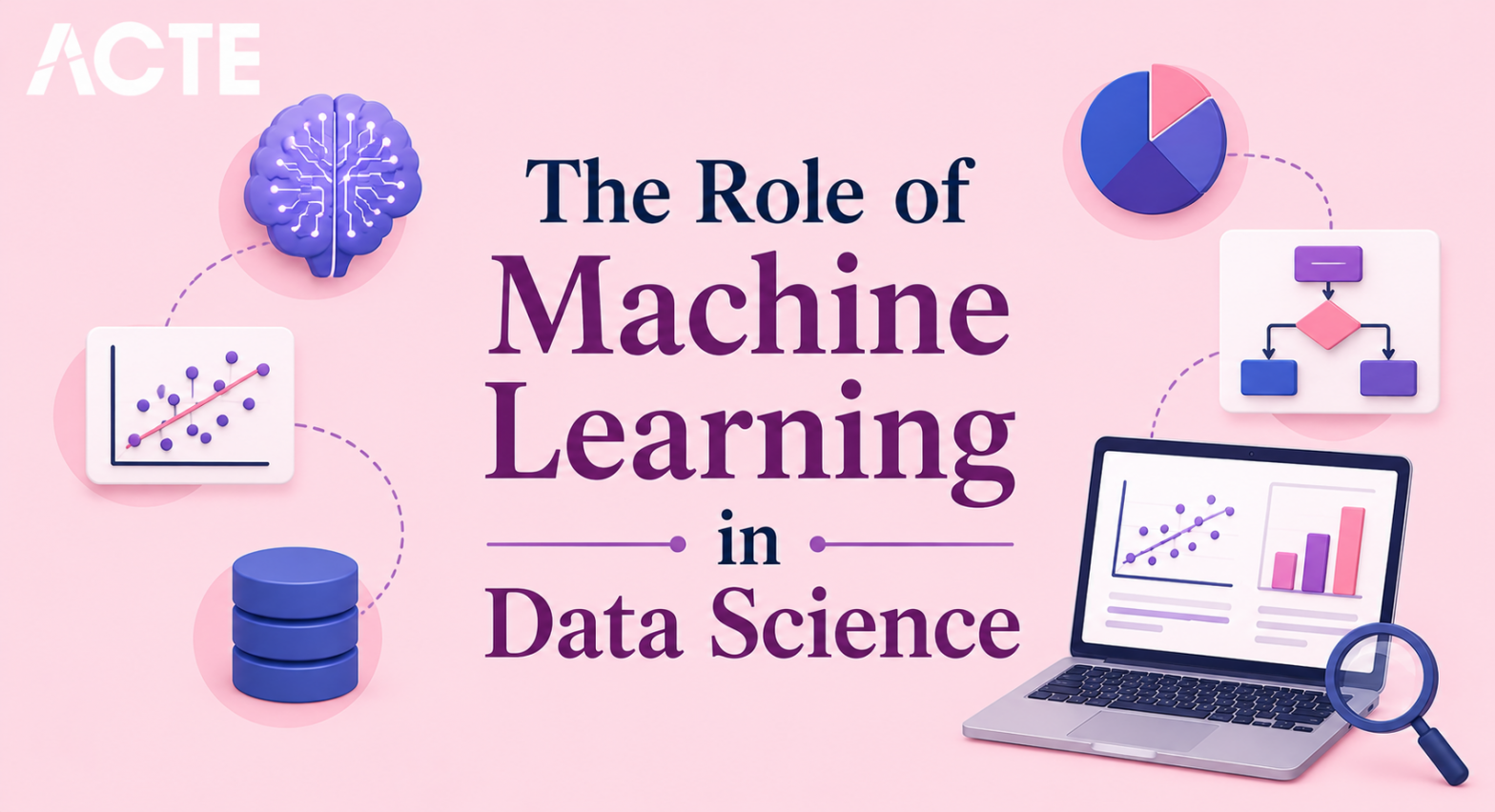
Last updated on 03rd Jun 2026| 7820
 (5.0) | 23549 Ratings
E-mail this post
(5.0) | 23549 Ratings
E-mail this post
- Introduction Machine Learning In Data Science
- Understanding Core Machine Learning Concepts
- Supervised Learning for Predictive Analytics
- Unsupervised Learning for Pattern Discovery
- Reinforcement Learning for Dynamic Decisions
- Feature Engineering and Model Optimization
- Evaluating Machine Learning Model Performance
- Real-World Applications Across Industries
- Conclusion
Introduction Machine Learning In Data Science
In this Machine Learning In Data Science, data is everywhere from your social media activities to how much money you have spent and even how much food you’ve thrown into your compost bin! The great thing about the role of machine learning in data science is that it allows you to take all of that raw data, and turn it, literally, into usable and logical information that will help solve many issues we have today. If you are just getting started with Data Science at this point, just learning algorithms and tools will not be enough inData Science Training . The only way to truly understand Data Science is to use the tools and algorithms, on real-world problems. This provides you with the confidence you need to be an analytical thinker and the skills required to become an industry-ready professional. Below are some great examples of beginner-friendly and industry-relevant data science concepts that you can complete, that also have real-world applications. Not only will these concepts help you understand how data science can be used in different industries, for example media, finance, health care, agriculture and customer service; they will also give you the strong foundation that you will need in order to move from being a theoretical analyst to a pragmatic analyst solving real-world problems.
Understanding Core Machine Learning Concepts
Understanding Core Machine Learning Concepts is a data science focus that determines whether or not a system can learn from data through algorithmic methods. Manual programming is a big problem in this day and age of digital information and there are so many ways to access complex datasets extremely rapidly. Most of this information is unstructured which makes the issue of manual rule creation a serious one in Data Science Training. Understanding Core Concepts aims to aid in solving the automation issue by creating a method of predicting outcomes automatically by analyzing historical data and determining if it is accurate. The system uses algorithms to analyze data and extract context, relationships and patterns associated with the variables. The model is initially trained on datasets containing both inputs and outputs so there will be a distinction between signal and noise when the training is completed. The model uses mathematical functions to convert data into predictions along with a decision algorithm such as optimization. Once trained, the system can classify new data by using the learned pattern. Less Manual Coding More Automated Insights. The project is an excellent beginner-friendly concept that provides exposure to Algorithmic Thinking, Model Training, and Data Concepts. The emphasis on Logical Modeling will also continue to increase through the years.
Supervised Learning for Predictive Analytics
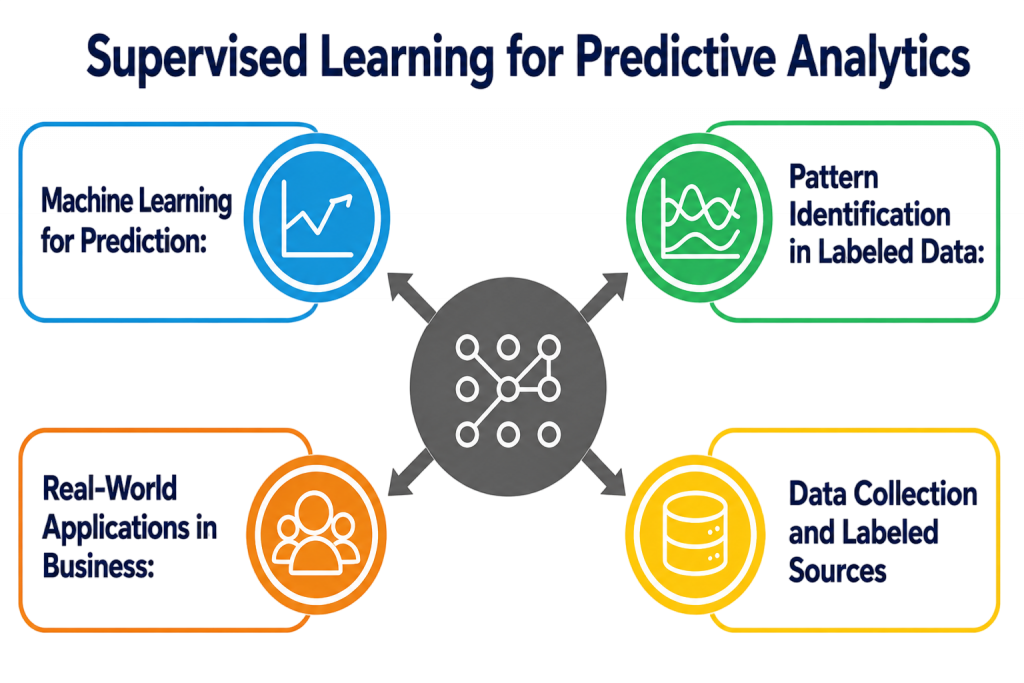
- Data Collection and Labeled Sources: Supervised learning begins with collecting large amounts of labeled historical data. This data is gathered from databases and historical records. It includes input features and known output labels. This raw data is the foundation for building accurate prediction models.
- Real-World Applications in Business: Supervised learning is very important in business for planning sales strategies. Companies use it to decide when to target customers and know Data Science vs Data Analytics vs Big Data. It also helps reduce loss caused by unexpected market changes. This improves productivity and supports better business decisions.
- Pattern Identification in Labeled Data: After collecting data, the next step is finding patterns in labeled examples. Data scientists analyze feature relationships like correlation trends. These patterns help understand how inputs map to outputs. This makes future predictive forecasting more reliable and structured.
- Machine Learning for Prediction: Supervised algorithms are used to predict future outcomes based on past data. Models like linear regression and random forests are commonly applied. These models learn relationships between variables and known labels. This helps generate more accurate forecasts.
- Importance in Forecasting and Validation: Predictive analytics plays a key role in predicting future trends like customer churn. Early algorithmic validation helps companies take safety measures in advance. This reduces damage to profits and know more anout Connection Between Data Science and Cloud Computing. It makes teams better prepared for extreme market conditions.
Ready to Pursue Your Data Analytics Certificate? View The Data Science Course Training Offered By ACTE Right Now!
Unsupervised Learning for Pattern Discovery
Unsupervised Learning for Pattern Discovery is a data science project that focuses on determining whether or not hidden structures exist in data through clustering methods. Labeled data is a big problem in this day and age of digital information and there are so many ways to access unlabeled datasets extremely rapidly. Most of this information lacks tags which makes the issue of finding patterns a serious one. Unsupervised Learning aims to aid in solving the labeling issue by creating a method of predicting similar attributes of data points automatically by analyzing datasets and determining if it is grouped and Impact Of Data Science on financial Service. The Unsupervised Learning system uses clustering algorithms to analyze numerical data and extract context, relationships and patterns associated with the distances. The model is initially trained on datasets containing no labels so there will be a distinction between natural clusters when the model is completed. The model uses distance metrics to convert raw data into cluster assignments along with a decision algorithm such as K-Means. Once trained, the system can classify data as belonging to specific groups by using the learned pattern. Less Manual Labeling More Efficient Data Grouping. The project is an excellent beginner-friendly project that provides exposure to Clustering Techniques, Dimensionality Reduction, and Machine Learning Concepts. The emphasis on Critical Thinking about Data Structures will also continue to increase through the years.

Develop Your Skills with Data Data Science Course Training
Weekday / Weekend BatchesSee Batch DetailsReinforcement Learning for Dynamic Decisions
- Data Collection and Environment Sources: Reinforcement learning begins with collecting large amounts of environmental interaction data. This data is gathered from simulated environments and live user interactions. It includes state transitions and reward signals. This raw data is the foundation for dynamic decision models.
- Pattern Identification in Reward Systems: After collecting data, the next step is finding patterns in reward behaviors. Data scientists analyze action sequences like trial and error trends . These patterns help understand how agents maximize rewards over time and know and know more about Cloud Computing and its Role in data science. This makes future decision making more reliable.
- Machine Learning for Dynamic Prediction: Reinforcement algorithms are used to predict the best actions based on environment states. Models like Q-learning are commonly applied. These models learn relationships between actions and delayed rewards. This helps generate more accurate and dynamic automated forecasts.
- Real-World Applications in Robotics: Reinforcement learning is very important in robotics for planning movement strategies. Robots use it to decide when to take specific physical actions. It also helps reduce error caused by unexpected physical obstacles. This improves productivity and supports better robotics.
- Importance in Safety and Automation: Reinforcement learning plays a key role in predicting optimal paths like autonomous driving routes. Early simulation training helps systems take safety measures in advance. This reduces damage to physical assets and Build a Career in Data Science Today. It makes communities better prepared for extreme automation.
- Data Collection and Test Sources: Model evaluation begins with collecting large amounts of unseen testing data. This data is gathered from held-out datasets and cross-validation splits. It includes features and true labels. This raw data is the foundation for measuring model accuracy reliably.
- Pattern Identification in Error Metrics: After collecting data, the next step is finding patterns in model errors. Data scientists analyze error rates like false positives and false negative trends. These patterns help understand how models fail over time. This makes future evaluations more reliable.
- Machine Learning for Performance Prediction: Evaluation metrics are used to predict how models will perform based on test data. Algorithms like confusion matrices are commonly applied. These metrics learn relationships between predicted values and actual values and know What is Data Sciencs. This helps generate more accurate performance assessments.
- Real-World Applications in Business Trust: Model evaluation is very important in business for planning deployment strategies. Companies use it to decide when to launch machine learning models. It also helps reduce loss caused by unexpected model failures. This improves productivity and supports better decisions.
- Importance in Risk Management and Validation: Performance evaluation plays a key role in predicting business risks like inaccurate recommendations. Early metric validation helps data scientists take safety measures in advance and Popular Data Science Tools. This reduces damage to brand trust. It makes teams better prepared for extreme conditions.
Excited to Obtaining Your Data Analytics Certificate? View The Data Science Course Training Offered By ACTE Right Now!
Feature Engineering and Model Optimization
Feature Engineering and Model Optimization is a data science focus that determines whether or not a model can perform better through data transformation methods. Raw features are a big problem in this day and age of digital information and there are so many ways to access messy datasets extremely rapidly. Most of this information is unoptimized which makes the issue of model accuracy a serious one. Feature Engineering aims to aid in solving the performance issue by creating a method of predicting better inputs automatically by analyzing variables and determining if it is useful. The optimization system uses statistical techniques to analyze data distributions and extract context, relationships and patterns associated with the target and Python for Data Science. The model is initially trained on datasets containing both original and transformed features so there will be a distinction between impactful and useless data when the process is completed.
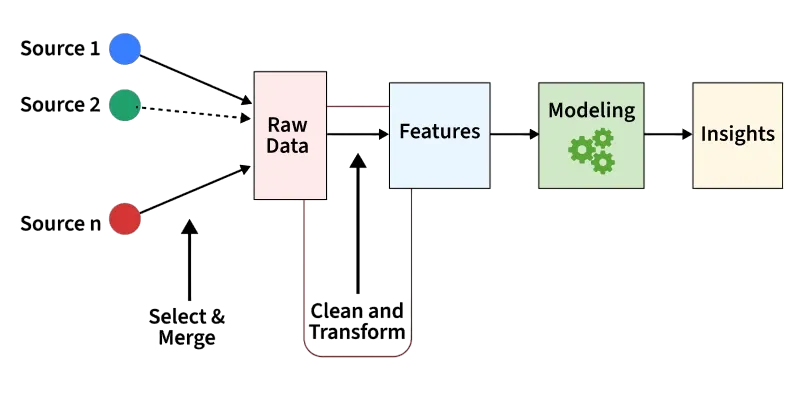
The process uses scaling techniques to convert skewed data to normal distributions along with a decision algorithm such as hyperparameter tuning. Once optimized, the system can classify features as either beneficial or harmful by using the learned pattern. Less Noisy Data More Accurate Machine Learning. The project is an excellent beginner-friendly project that provides exposure to Data Transformation, Model Tuning, and Statistical Concepts. The emphasis on Critical Thinking about Variables will also continue to increase through the years.
Are You Considering Pursuing a Data Analytics Master’s Degree? Enroll For Data Science Expert Masters Program Training Course Today!
Evaluating Machine Learning Model Performance
Set to Ace Your AWS Job Interview? Check Out Our Blog on Data Science Interview Questions & Answer
Real-World Applications Across Industries
Real-World Applications Across Industries is a data science project that focuses on determining whether or not machine learning can solve practical problems through deployment methods. Theoretical knowledge is a big problem in this day and age of digital information and there are so many ways to access business use cases extremely rapidly. Most of this information lacks execution which makes the issue of real-world impact a serious one. Real-World Applications aims to aid in solving the implementation issue by creating a method of predicting similar business attributes automatically by analyzing industry data and determining if it is viable inData Science Training. The application system uses machine learning to analyze sector data and extract context, relationships and patterns associated with the operations. The model is initially trained on datasets containing both historical and live examples so there will be a distinction between theory and practice when the project is completed. The model uses deployment pipelines to convert code into business value along with a decision algorithm such as ROI calculation. Once deployed, the system can classify business problems as either solved or pending by using the learned pattern. Less Theoretical Study More Practical Industry Value. The project is an excellent beginner-friendly project that provides exposure to Business Integration, Deployment Concepts, and Machine Learning Concepts. The emphasis on Critical Thinking about Business Value will also continue to increase through the years.
Conclusion
Machine Learning In Data Science concepts for beginners learning supervised learning, unsupervised learning, and model evaluation show how useful it is to use data to solve real-life problems. They’re great for helping people understand how raw data is collected, processed, and turned into useful information. By mastering these concepts, beginners gain hands-on experience with machine learning and data analysis. Each concept develops a different set of capabilities: some with clustering, others with classification, some with optimization, and still others with pattern recognition – all of which are extremely valuable in today’s tech-driven workplaces in Data Science Training . Working on real-world concepts is a great way for a beginner to build a strong foundation that they can use to apply for jobs in data science. Understanding these concepts bridges the gap between theory and practice. When a learner explores multiple concepts, they increase their confidence in using machine learning. Overall, concept-based learning is probably the best way for someone just getting into data science to grow.